
Prime Minister Narendra Modi's opinion piece in Canada's The Globe and Mail focuses on commercial cooperation in the civil nuclear energy sector.

President Xi Jinping's visit may put relations between India and China on a new trajectory
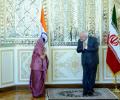
India's low passion, very cautious, relationship with Iran of the last 36 years awaits transformation, says Lieutenant General Syed Ata Hasnain (retd). Prime Minister Modi's visit cannot be a negotiating event; it is a symbolic one to strengthen the politico-diplomatic relationship.

The main culprit in vitiating the inter community/caste/class relations has been the so called 'targeted' approach. This is nothing but discrimination on the basis of faith/caste/class. When an equally poor and deprived child is denied scholarship, despite equal merit, resentment begins to brew, says Colonel (retd) Anil Athale.
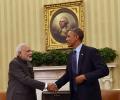
Furthering Indo-US cooperation on terrorism, Prime Minister Narendra Modi and President Barack Obama on Tuesday agreed to make "joint and concerted efforts" to dismantle safe havens for terror and criminal networks like Lashkar-e-Tayib, Jaish-e-Mohammad, Dawood-company, Al Qaeda and the Haqqani network.

China's desire to have India as part of its ambitious Maritime Silk Route makes strategic sense for both nations. However, it would involve substantive assurances from Beijing, says Dr Rahul Mishra
.jpg)
To no one's surprise, the first question directed at Indian Ambassador to the United States Dr S Jaishankar -- at the end of his first public address since he assumed his duties in December -- was about the controversial Devyani Khobragade episode.
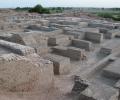
"South Asian studies" academics in the US would do well to introspect how they wittingly or unwittingly become part of Pakistan's proxy war in wielding influence over academics and policy, says Sankrant Sanu.

Few readers will remember the socialist utopia of Indira Gandhi when food queues were the norm even for the middle class and tankers supplied water at odd hours of the night twice a week. Is that what you are trying to return us to, dear Congress, asks Jaideep Prabhu

'The US wants Modi to succeed because we want India to succeed. For our part, when India thinks of its partners in the world, we want it to think of the US first. That means positioning our country as the preferred provider of the key inputs that can help to propel India's rise.' 'The meeting between Modi and Obama is, and must be, an opportunity for true strategic dialogue -- not a scripted exchange of talking points, but an open discussion of the big questions. What kind of world do we want to live in? What are our true priorities? And most importantly, why does this partnership still matter?'

'The diplomat's arrest has led to a major diplomatic spat, the likes of which I have not seen in my nearly three decades of covering the US-India relationship, says Aziz Haniffa. 'The knee-jerk reaction by the powers-that-be in Delhi was myopic to say the least.'

'Happily,' says Ambassador B S Prakash, 'BRICS displayed new-found energy and built something real, a bank. Between needless nihilism and as yet unjustified euphoria, there are many stations for the BRICS train and we can watch its progress with renewed interest.'

With the weaker-than-expected agreement at the recent Climate Change Conference at Lima, there is an urgent need to highlight endeavours in civil society and business for a sustainable global economy with grassroots empowerment, say Rajni Bakshi.

Foxconn is the world's largest contract manufacturer for electronic goods and makes iPhones for Apple and smartphones for its Chinese rival Xiaomi.

If Indian PM boycotts the CHOGM, it is likely to add to Sri Lanka's bitterness. This would not help India's desire to add more depth and content to its relations with Sri Lanka but its ability to influence Sri Lanka's decision making process on the both strategic issues and on Tamil minority issues, says Colonel (retd) R Hariharan.
At no other time has a single meeting of the leaders of two democracies been so critical and hazardous.

State after state has imposed an alcohol ban, and has had to retreat, unable to address the financial and administrative fallout. Are we set for more of this cycle, asks Aditi Phadnis.

The government must justify why we need to buy foreign reactors when we have developed up to 700 MWe unit-size pressurised heavy water reactors, a design which can be easily extended to 900 to 1000 MWe unit size. Why can't the 'Make in India' philosophy apply to indigenous nuclear reactors, more than 18 of which have been designed, built, and being operated by Indian engineers, asks Dr A Gopalakrishnan.

'There is tension between the zones all the time.'

'We want to provide data, we want to provide consultation, but we don't want to lecture.' 'The consciousness about this issue in India is starting to get quite high and if we can help contribute to solving this air quality issue in a spirit of partnership with the Indians, it would be a big achievement.'
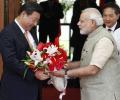
Arvind Subramanian talks about US and China's power play and where India figures in these dynamics.

The Forbes 30 Under 30 list is harder to get into than Stanford or Harvard University. Meet the desis who made the cut this year.

With facts and figures, the CAG report has highlighted how Gujarat was far from a role model for states across India, and that the progress made in this province in western India in improving agriculture, education, healthcare and empowerment of women and children, was not exactly creditable, says Paranjoy Guha Thakurta.
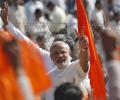
'A change of government will bring about a lot of changes because everything is frozen for the last two years. So, the frozen energies of India will be released.' Swadeshi Jagran Manch convenor Swaminathan Gurumurthy discusses the Modi phenomenon with Shobha Warrier/Rediff.com

'The real test will be in defence-related deals, for instance the Javelin anti-tank missile: Is the US willing to co-develop something with India, on terms that will support the 'Make in India' initiative? Is there defence technology transfer? Or will it dump old junk on India?' asks Rajeev Srinivasan.

'Modi as the PM of the country has to take everybody on board and deliver on good governance. That is his responsibility. In that talking alone won't help, he's working.' Commerce Minister Dr Nirmala Sitharaman tells Sheela Bhatt/Rediff.com how the Modi government plans to change India.

'We have about Rs 4 lakh crore debt on a state budget of about Rs 1.5 lakh crore.' 'We are in a debt two-and-a-half times our annual budget,' says the banker who would have been Tamil Nadu's finance minister had the DMK won.

If the impact of the Greece crisis spreads across Europe and parts of the world which are more interconnected than ever before, India cannot hope to be insulated, says Paranjoy Guha Thakurta.
 © 2026 Rediff.com - Advertise with us - Disclaimer - Privacy Policy - Sitemap - Feedback - About us - Terms of use - Grievances